
17 Jul What AI Should Change About Your Marketing Team
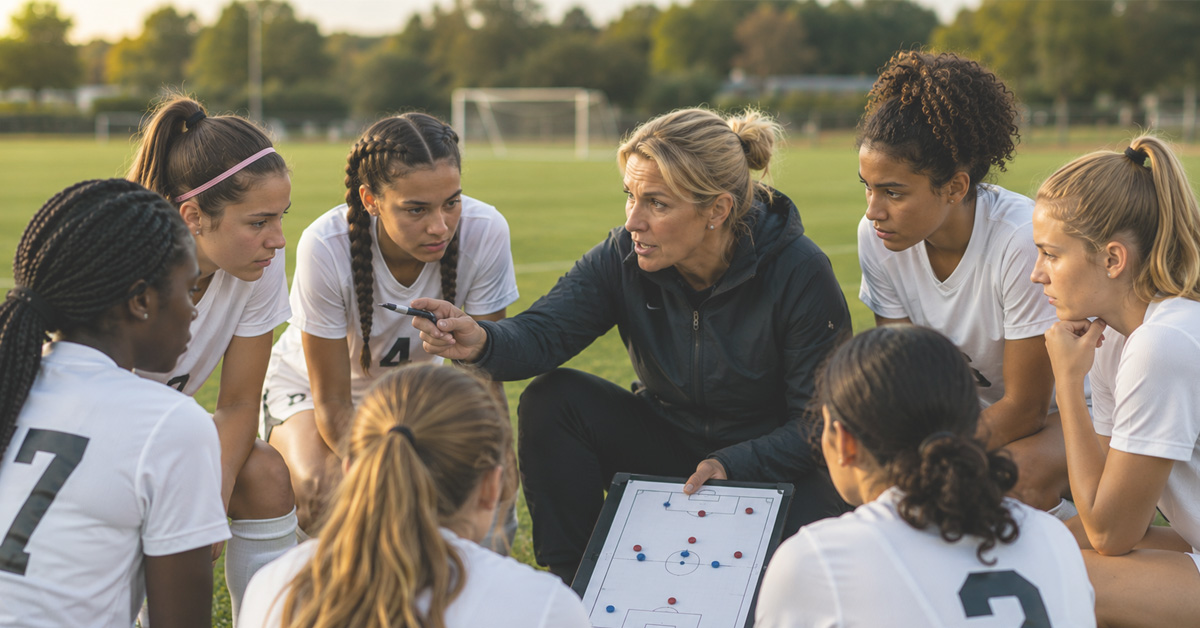
I’ve spent a lot of weekends on the sidelines watching my daughters play soccer. Like most parents, I started out focused completely on the girls, but somewhere along the way I found myself paying just as much attention to the coaches. As the girls became better players, the role of the coach changed with them.
The more I watched that evolution, the more it reminded me of what I’ve seen happen in marketing over the course of my career.
Marketing has changed dramatically over the years. AI is changing how the work gets done, but I don’t believe it’s changing the need for experienced people to lead it. If anything, I think it’s making that experience even more important.
When the girls were three and five years old, the coach’s job was fairly simple: teach the basics and make sure the kids had fun. The coaches were usually parents or older siblings volunteering an hour on a Saturday morning. Success meant keeping everyone moving in roughly the same direction, tying the occasional cleat, and helping the kids understand which goal they were supposed to attack.
As the girls became more competitive, those volunteer coaches were replaced by experienced, professional coaches. The players already knew how to pass, dribble, and shoot. What they needed now was someone who could teach positioning, decision-making, and how to see the field differently. They needed an experienced coach who could help them grow as players and as a team. As the players became more capable, the coach’s experience became more valuable, not less.
Marketing Has Evolved the Same Way
The more I thought about those coaches, the more I realized I’d watched marketing evolve in much the same way.
When I started my career at a large global company, marketing was designed around people because there really wasn’t another option. We had specialists for product marketing, communications, advertising, interactive marketing, websites, and just about everything else. Marketing automation and AI didn’t exist, so when more work needed to happen, you added more people. Did we need every one of them? Probably not, but people were how the work got done.
Years later, at a much smaller growth-stage company, the picture looked very different. Technology had improved, budgets were tighter, and the marketing team was intentionally lean. We had a junior marketing coordinator who could handle most of the tactical execution without skipping a beat and gave 110% every day. She knew how to execute the work in front of her, but she had not yet accumulated the experience to lead the function or develop the commercialization strategies the company needed to increase its growth potential.
That’s why Dan and I joined the team. Our role was to develop the growth strategies and then bring them to life through messaging, creative, website design, paid search, SEO, and whatever else the business needed. We had both spent years as doers, so we could still get our hands dirty when necessary, but we also had the experience to connect the dots, set priorities, and decide what should happen next. When we needed specialized PR expertise, we brought it in. We assembled the capabilities the company needed rather than building a large traditional department.
What AI Changes
Now AI is changing the equation again. It is remarkably good at helping marketers research, analyze, brainstorm, and complete work that once took hours. I use it every day and would not want to go back. What concerns me is how quickly many conversations move from what AI can help a marketing team accomplish to how many people it might replace.
AI is absolutely changing how marketing teams are built. The mix of people may change, the tools will change, and some companies may need fewer people focused primarily on production. What I am less convinced about is the assumption that this reduces the need for experienced marketers. In many cases, the opposite may be true. The more work AI can execute, the more important it becomes to have someone who understands the business, recognizes which work matters most, and asks the right questions.
For years, experienced marketers spent a tremendous amount of time producing because the work simply had to get done. AI gives them room to spend more time understanding customers, working alongside sales and product, refining positioning, identifying growth opportunities, developing commercial strategy, coaching the team, reviewing the work, and explaining the thinking behind the decisions.
Experience Still Has to Be Developed
None of this means junior marketers no longer have a place. Every experienced marketer started there, and experience only comes from doing the work, making mistakes, and learning from people who have already been through it. AI can help newly minted marketers execute faster, but it cannot replace the apprenticeship that teaches judgment. We still need to develop the next generation of marketers and, eventually, the next generation of coaches.
The people doing the work may change, the tools they use will absolutely change, and the way a marketing team is assembled may look very different from one company to the next. It may be fully internal, completely outsourced, fractional, or some combination of all three. What should remain is experienced marketing leadership guiding the work and helping less experienced marketers grow into that role over time.
Marketing is simply the function I’ve spent my career watching up close, but I suspect the same principle will apply across every part of a company as AI changes how work gets done. The people doing the work, the tools they use, and the way a marketing team is assembled may all change. What I don’t believe will change is the importance of experienced marketers and the role they play in helping companies grow.
Better players didn’t eliminate the need for great coaches. I don’t believe better tools will eliminate the need for experienced marketers either.
AI is changing the tools. Experience still drives the outcome.

Every technology revolution creates new opportunities and new distractions. AI will continue to change how marketing gets done, but successful marketing has never been about the tools alone.
That's where SRGP comes in. We've spent more than two decades helping B2B companies navigate every major shift in modern marketing. The work will continue to change, but our job remains the same. We help companies understand where new technologies create real value and how they fit into a smarter commercial growth strategy.
If you're looking for a growth partner who can help you develop your commercial growth strategy and bring it to life, we'd love to meet you. From growth strategy and positioning to messaging, marketing execution, and AI adoption, we work alongside leadership teams to help companies accelerate growth with confidence.
Meet With the Founders